Our AI Tools Under the Legal Microscope
Where do we actually stand legally, with everything we build? We entered with questions and left with something far more valuable: a new perspective.
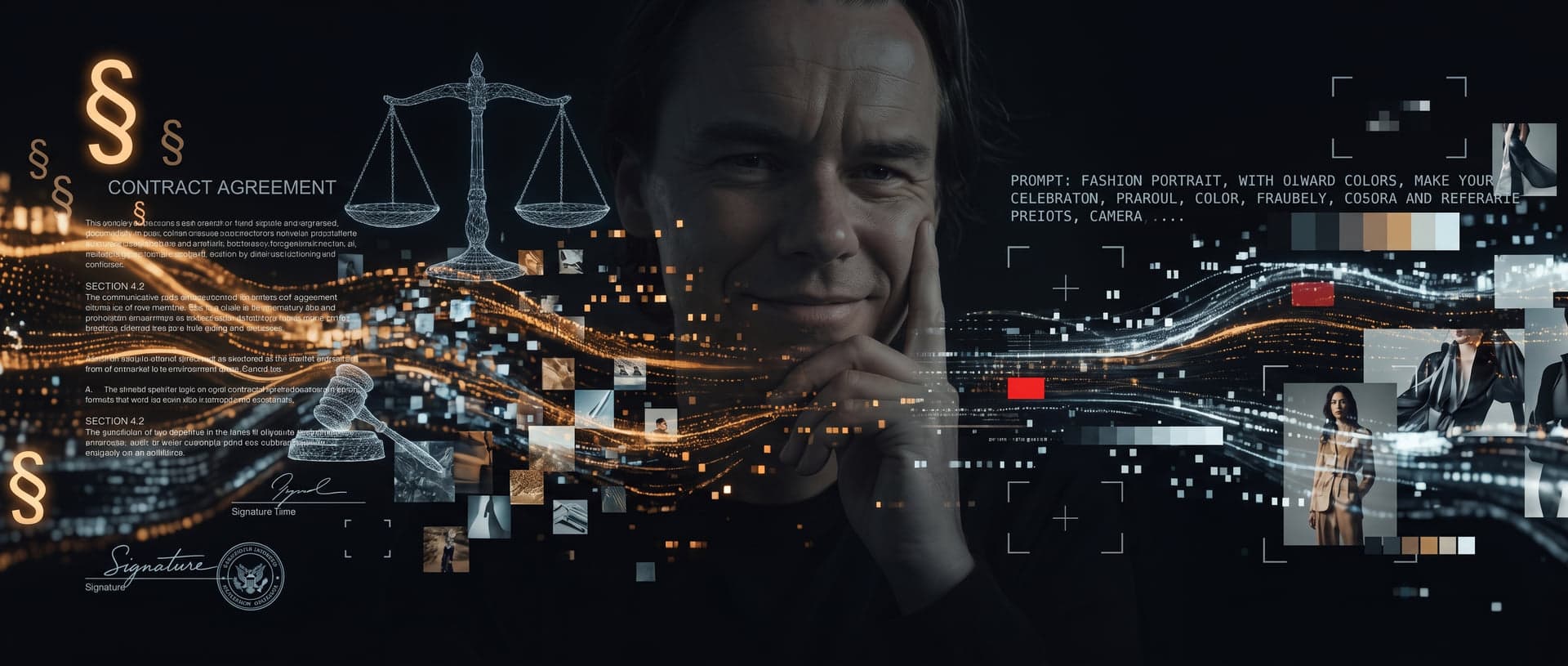
Figure 01.0 — Our AI Tools Under the Legal Microscope
Friday morning, eleven o'clock, Amsterdam. A quick trip into the city — always nice (once you've found your spot)— and an hour reserved for something most creators only consider when it's too late: the legal aspect of what we create.
I build a lot. Quickly. With AI, with images, with tools that sometimes go live faster than you can say "terms and conditions." So, we thought it wise to have a calm discussion with someone who truly understands this.
It turned out to be more enjoyable than expected. A few things stuck with us — loosely, without giving everything away.
A Face Becomes a Portrait Faster Than You Think
The biggest eye-opener. A "portrait" is legally not just a photo of someone — it is any depiction that evokes an existing person, even if you never intended it. There have even been legal cases about lookalikes, all the way to the Supreme Court. A generated face that coincidentally resembles someone can thus be considered a portrait.
For our tools, we have this neatly covered: our prompts describe atmosphere, light, and styling — never a face, never hair. And the digital models we create ourselves are never used as is: they are always edited and adjusted before being displayed anywhere.
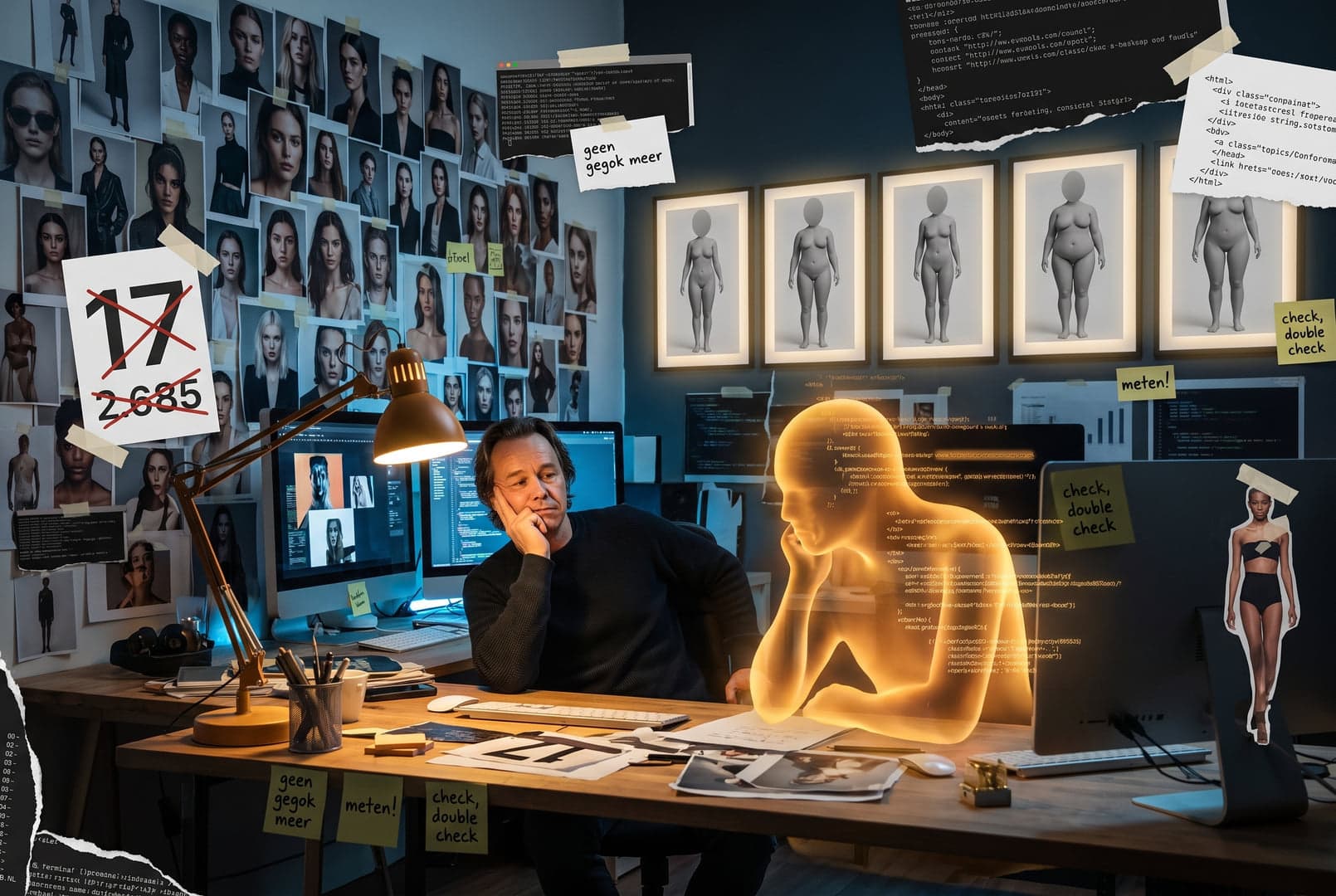
But the most interesting insight from the conversation: you can build something here too. So that's what we're going to do — a check that evaluates each generated face before it goes live. To see if it doesn't resemble an existing person too much. A hundred percent foolproof doesn't exist in this field, but such a 'well-integrated check' makes the difference between hoping and knowing where you stand. More on that later.
Locations: Inventing is Allowed, the Eiffel Tower is Not
Creating locations yourself? Fine. For our digital modelling agency, we build them ourselves, focusing on atmosphere — not the icon. A piece of facade, a spot with Ibiza light, a detail that tells the story. So not someone in front of the Eiffel Tower, but rather on the Eiffel Tower: just a piece of steel in view, and you feel where you are.
Because if you want to show such an icon recognisably, just show the real one. A generated variant — slightly different, slightly more beautiful — is the sensitive scenario. A fine line between inspiration and imitation, then. We stay on the side of atmosphere. A beach house is a beach house.
Promise What You Deliver, No More
Perhaps the most pragmatic lesson: we provide tools, not guarantees on the outcome. You can promise to do your best and that your software is sound — not that every output of an AI tool can be released into the world flawlessly.
Having that distinction clear brings peace of mind. You know what you promise, and what lies with the other party.
AI Images Shouldn't Be a Secret
Since this summer, there is a transparency obligation in the Netherlands for AI-generated images. If you use AI images — for instance, from us — pay attention to this:
Just say it. Make it visible that the image is AI-generated, for example in the footer or next to the image itself.
Also for machines. The marking must be machine-readable, so also in the code or metadata.
Pass it on. If your client publishes the image further, they must also mention it.
How it should look exactly is still quite open — everyone is still searching, including us. But the direction is clear, and it suits us perfectly: we already like to mention that something is AI. There will surely be another blog about this later.
What We Mainly Took Away
We went in with "just covering the risks" and came out with the feeling that legal thinking is simply a form of design.
Frameworks are not a brake. Frameworks are structure. And we quite like structure.
Have a great weekend.
#andoor Peter.
Thanks to Merel, who can explain complex matters simply and passionately. That is a skill.