Meta Connect 2026: An AI Agent in Your Glasses, and Not in Europe for Now
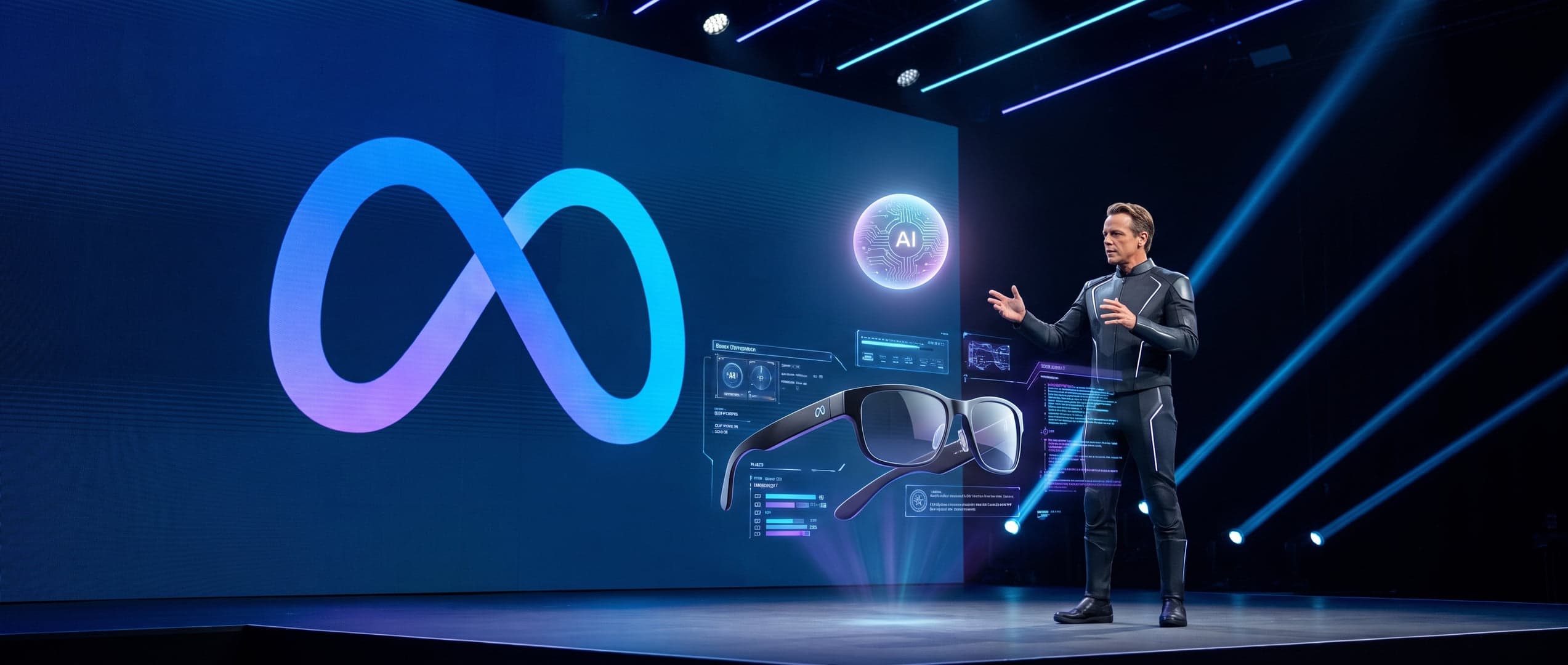
Figure 01.0 — Meta Connect 2026

Last Wednesday, Meta held its annual Connect. Zuckerberg's narrative: a personal AI agent, linked to hardware you wear all day. Here are the key points.
Muse: The Agent That Performs Tasks for You
Muse is not a chatbot but an agent. You describe what needs to be done; Muse plans the steps, uses a browser and linked services, and works in the background until the task is complete or requires your input.
Integrations include Gmail, Google Calendar, Spotify, OpenTable, and Facebook and Instagram.
At Connect, Meta showcased new features, connectors, and a new model, and announced that Muse is coming to glasses. A date for this has not yet been set.
The most striking moment: Muse Charm, a small device reminiscent of a Tamagotchi with a screen, speakers, microphones, and fingerprint sensor. Details to follow later this year.
Is Muse Coming to Europe?
Not for now. Muse launched on 8 September in the US, with Canada following on 18 September; elsewhere, you get a waiting list.
My estimation (not confirmed): the EU will take longer due to GDPR and the AI Act. For comparison: Meta AI only came to Europe in March 2025, long after the US launch.
New Glasses
All details below are from the Engadget summary.
Meta VR Glasses: the biggest announcement. Approximately 100 grams, 5K screen, computing power in a puck on a cable; coming next spring for $1,300.
Ray-Ban Meta Audio: Meta's first glasses without a camera, up to 12 hours of battery life, starting at $349, available from 13 October.
Ray-Ban Meta Gen 3: slimmer, 9 hours of battery, six microphones, 3K video; now also available as Aviator, starting at $449.
Meta Ray-Ban Display is getting closer: pre-orders in Germany, France, and Italy for €899, available from 13 October. The Netherlands is (not yet) included.
Hearing Enhancement: first in the US, intended for noisy environments, not as a replacement for a hearing aid.
Conclusion
Meta is building a combination of agent and glasses. For Dutch users, it's mostly a matter of watching: Muse is not available here, and the most interesting hardware is first coming to the US and a few major EU countries.