Vandaag aangekondigd. Nieuwe beeldgenerator binnen ChatGPT. Betere tekstweergave, meertalig, scherpere beeldbewerking. Daarvoor had OpenAI al 4o-beeldgeneratie uitgebracht als standaard in ChatGPT. Nu komt daar een flinke stap bovenop.
Interessant. Niet omdat alles verandert. Wel omdat je binnen ChatGPT zelf nu veel gerichter met beeld kunt werken.
Wat er nu kan
Een beeld genereren vanuit een precieze prompt
Een bestaande afbeelding gebruiken als visuele input of referentie
Stijl, compositie en details veel scherper aansturen
Gericht aanpassen in plaats van opnieuw beginnen
Vooral dat laatste telt. Referentiebeeld plus strakke promptstructuur.
Niet: "maak een mooi modebeeld."
Wel:
Waar het voor ons interessant wordt
Onze volgorde blijft hetzelfde: eerst identiteit, dan esthetiek. Nooit andersom.
Dit type prompt werkt daar direct op zie onderin deze blog voor start deel prompt.
Je gebruikt ChatGPT Image 2.0 niet als "maak maar iets moois"-machine. Je stuurt het strak. Daar wordt het bruikbaar.
Wat dit níet betekent
We gooien onze werkwijze niet om.
Wat blijft:
Dat is voor ons de basis.
Waarom dan toch interessant
Image 2.0 laat zien dat je binnen ChatGPT zelf serieus kunt testen met:
Een extra laag in het proces. Geen vervanger van onze stack.
🧠 best goed in identiteit bouwen
🎯 snapt huid, spanning, gezicht — high-fashion niveau (volledig testen volgt)
❌ geen geheugen, geen consistency engine
Conclusie
Voor ons is Image 2.0 nu vooral:
testomgeving
verkenning van identiteit
snelle visuele validatie van promptstructuren
extra stap vóór of naast onze bestaande workflow
GPT-lancering van vanavond, 21 april, 21:00 NL tijd: https://www.youtube.com/watch?v=sWkGomJ3TLI
Zie kleine verschillen, eerste beeld bemaakt door: Higgsfield / Nano banana Pro
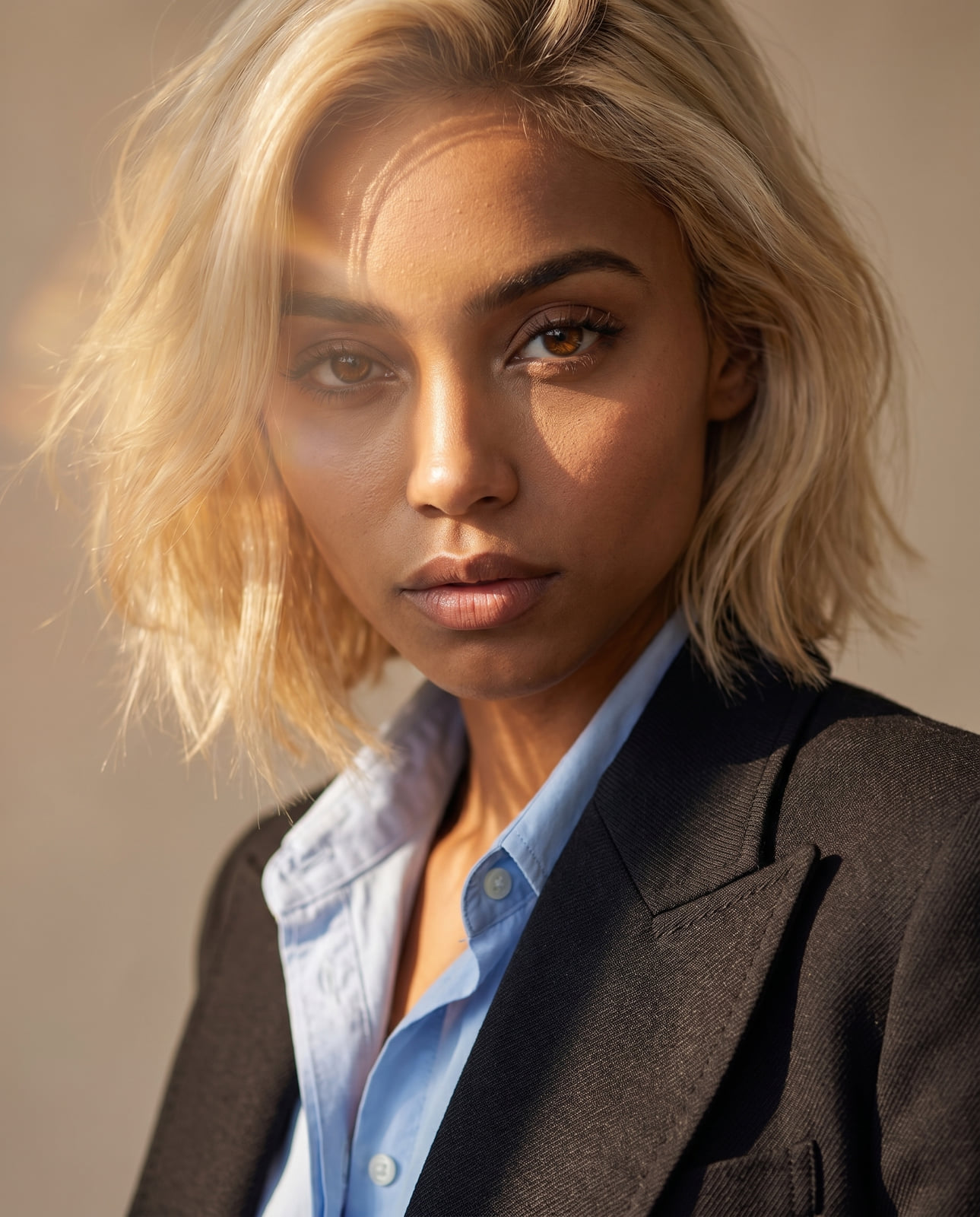
High-fashion studio editorial photograph, tight head-and-shoulders portrait, full color.
Torso angled slightly toward camera-right, shoulders staggered with the right shoulder positioned marginally forward.
Head turned toward camera with slight downward tilt, chin subtly lowered, gaze directed straight into lens.
Right shoulder covered by structured blazer lapel; left shoulder partially visible beneath blazer edge.
No visible arm elevation within frame; blazer fabric resting naturally along shoulder line without lift.
Visible contact points: layered garments resting against collarbone and shoulder.
Tailored blazer with structured lapel and visible weave texture; light blue collared shirt beneath with open neckline and visible button placket; fabric surfaces show natural grain, seam definition, and fold formation; skin rendered with natural tonal variation and visible pore-level detail.
Hair remains identity-locked to the reference image and is described only through physically verifiable motion and interaction. No color, length, or style descriptors are permitted.
Strong directional warm light entering from camera-left creating pronounced light streaking across the facial plane and partial optical flare; light rakes across forehead, cheekbone, and nose bridge, leaving the opposite side in controlled soft shadow; high contrast with feathered shadow edges; highlight roll-off visible along cheek and lower lip; subtle non-linear highlight bloom interacting with hair edge and blazer shoulder; warm skin tones contrasted against a neutral beige background; high-dynamic range fall-off in brightest streak zones without clipping.
Minimal studio environment with smooth beige backdrop; shallow depth separation; mild telephoto compression; photographic layering with intentional optical flare passing across mid-frame.
Pure studio photography. Editorial realism. No cinematic effects.
En vanaf nu: dit resultaat uit ChatGPT Images 2.0
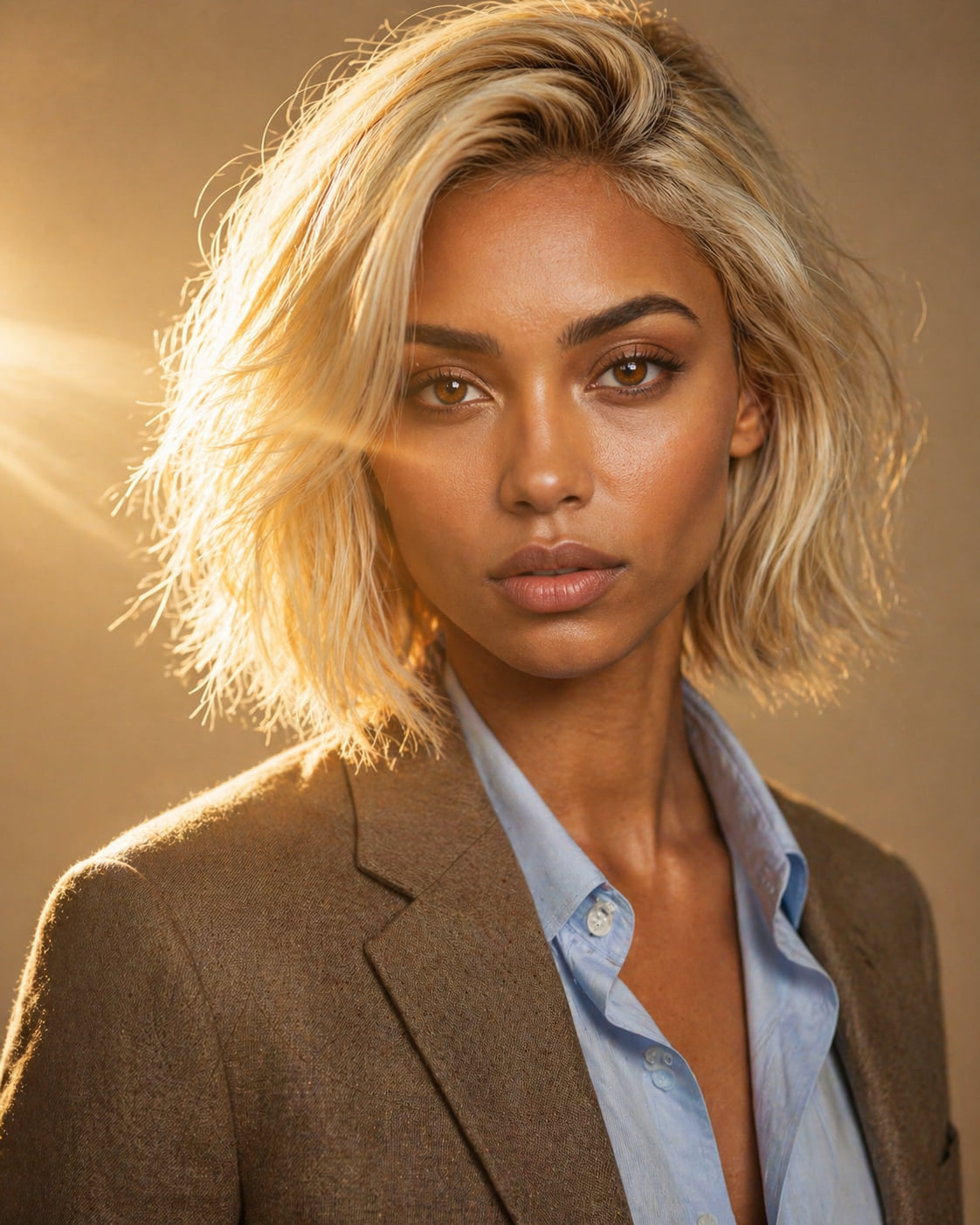
High-fashion studio editorial photograph, tight head-and-shoulders portrait, full color.
Torso angled slightly toward camera-right, shoulders staggered with the right shoulder positioned marginally forward.
Head turned toward camera with slight downward tilt, chin subtly lowered, gaze directed straight into lens.
Right shoulder covered by structured blazer lapel; left shoulder partially visible beneath blazer edge.
No visible arm elevation within frame; blazer fabric resting naturally along shoulder line without lift.
Visible contact points: layered garments resting against collarbone and shoulder.
Tailored blazer with structured lapel and visible weave texture; light blue collared shirt beneath with open neckline and visible button placket; fabric surfaces show natural grain, seam definition, and fold formation; skin rendered with natural tonal variation and visible pore-level detail.
Hair remains identity-locked to the reference image and is described only through physically verifiable motion and interaction. No color, length, or style descriptors are permitted.
Strong directional warm light entering from camera-left creating pronounced light streaking across the facial plane and partial optical flare; light rakes across forehead, cheekbone, and nose bridge, leaving the opposite side in controlled soft shadow; high contrast with feathered shadow edges; highlight roll-off visible along cheek and lower lip; subtle non-linear highlight bloom interacting with hair edge and blazer shoulder; warm skin tones contrasted against a neutral beige background; high-dynamic range fall-off in brightest streak zones without clipping.
Minimal studio environment with smooth beige backdrop; shallow depth separation; mild telephoto compression; photographic layering with intentional optical flare passing across mid-frame.
Pure studio photography. Editorial realism. No cinematic effects.
Voor ZAPPA verandert de kern nog niet.
Maar komende week gaan we alles in Image 2 testen en updaten. Later meer.
Peter
// IDENTITY LOCK (NON-NEGOTIABLE)
Use the provided reference image as the exact identity source.
Face structure, proportions, eyes, nose, mouth, bone structure and skin characteristics must remain unchanged.
No beautification.
No reinterpretation.
No deviation.
No blending with generic faces.
Hair remains identity-locked and is only affected by physical interaction (light, gravity, movement).
No descriptive override allowed.
---
SCENE / COMPOSITION
[ jouw bestaande prompt hier ]
// Plak hier je code...