First, the Terms
Tidal is a music streaming service, like Spotify, but smaller. The owner is the American company Block. AI music is music that a programme creates from a text prompt: you type "cheerful summer song" and receive a complete track, with vocals. A distributor is the company that supplies music from creators to streaming services. Royalties are the money a creator receives when someone listens.
What Is It?
On Tuesday, 24th November, Robert Andersen announced it on X. He leads Tidal at Block. From 9th December, Tidal will remove all tracks fully created by AI. No new ones will be added. Variety was among the first to report it.
It's about approximately 29 million tracks. According to The Next Web, they must be gone by early 2027. After that, Tidal expects to reject 80,000 to 85,000 each day.
So not yet removed. Announced.
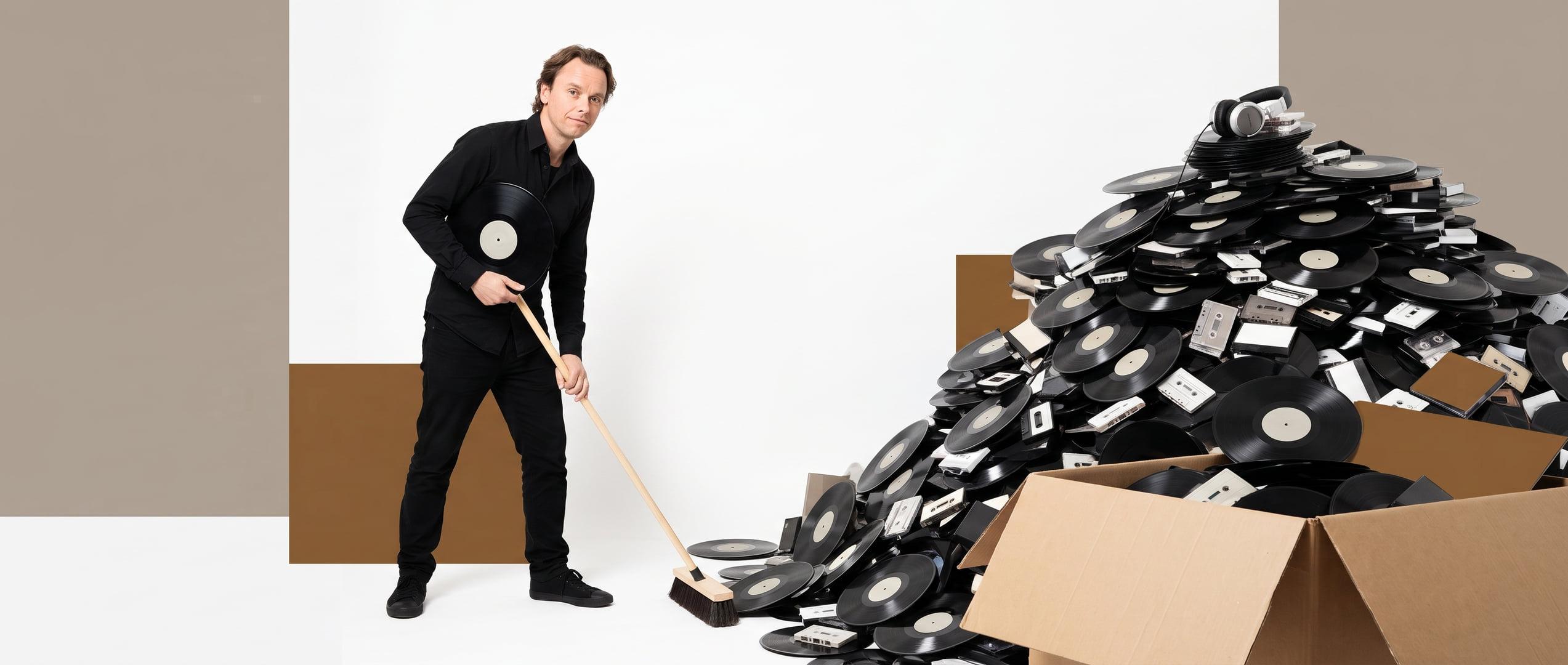
[IMAGE: an endless record collection, almost all covers unopened in plastic]
The Numbers
29 million tracks are going away.
43% of everything submitted in the last 90 days was detected by Tidal as AI.
96% of the AI tracks have never been played. Zero times.
According to DJ Mag, it is 6.3% of the entire catalogue.
All numbers come from Tidal itself. No one outside has recounted them.
Do the maths. Four per cent was listened to. That's still over a million tracks.
Why Now
In June, Tidal tried a softer approach. AI music could stay, received a label, and no longer earned money. Billboard wrote about it then.
It didn't help. The flow kept coming. According to the Washington Times, Andersen felt a stronger measure was needed.
Even without a revenue model, people kept uploading. That says something about how little effort it takes.
What Is Still Allowed
AI as a tool. A musician using AI in the creation process can stay, reports Notebookcheck. The ban applies to tracks where no human was involved.
Tidal draws the line with detection software. It can make mistakes. This is stated in their own terms, writes The Next Web. Those who are wrongly labelled can contact support.
The First? Depends
Tidal calls itself the first streaming service to do this. Bandcamp banned AI music back in January, as stated in the same Billboard piece. It depends on what you call a streaming service.
The rest are currently opting for labelling. Spotify removed 50 million spam tracks from recommendations but left them up. Apple Music requires labels. At Deezer, more than half of the uploads were AI in June. That also comes from The Next Web.
What We Think
Creation costs almost nothing anymore. That applies to music. It also applies to images, and that's what we're involved in every day.
Standing out hasn't become any cheaper.
Someone on LinkedIn summed it up like this: if you ever got two likes on a post, you did better than 96% of those 29 million tracks.
Tidal draws the line at "fully". With AI is allowed. By AI is not. That's a line we can work with.
Small
The numbers don't entirely match. DJ Mag mentions about 27 million labelled tracks and 29 million removals. We haven't found an explanation for the difference.
The AI policy on tidal.com calls itself a living document. It can change again.
To Follow
9th December: does the removal really begin?
Will Spotify, Apple Music, and Deezer follow, or will they continue labelling?
How many real creators will be mistakenly swept away?
We haven't listened to any of those 29 million tracks. That puts us in good company.
Claude & Peet
Sources



Stories from our work and our minds, in your inbox.
One mail with everything: the blog, AI news and what we are building. No fixed frequency.


